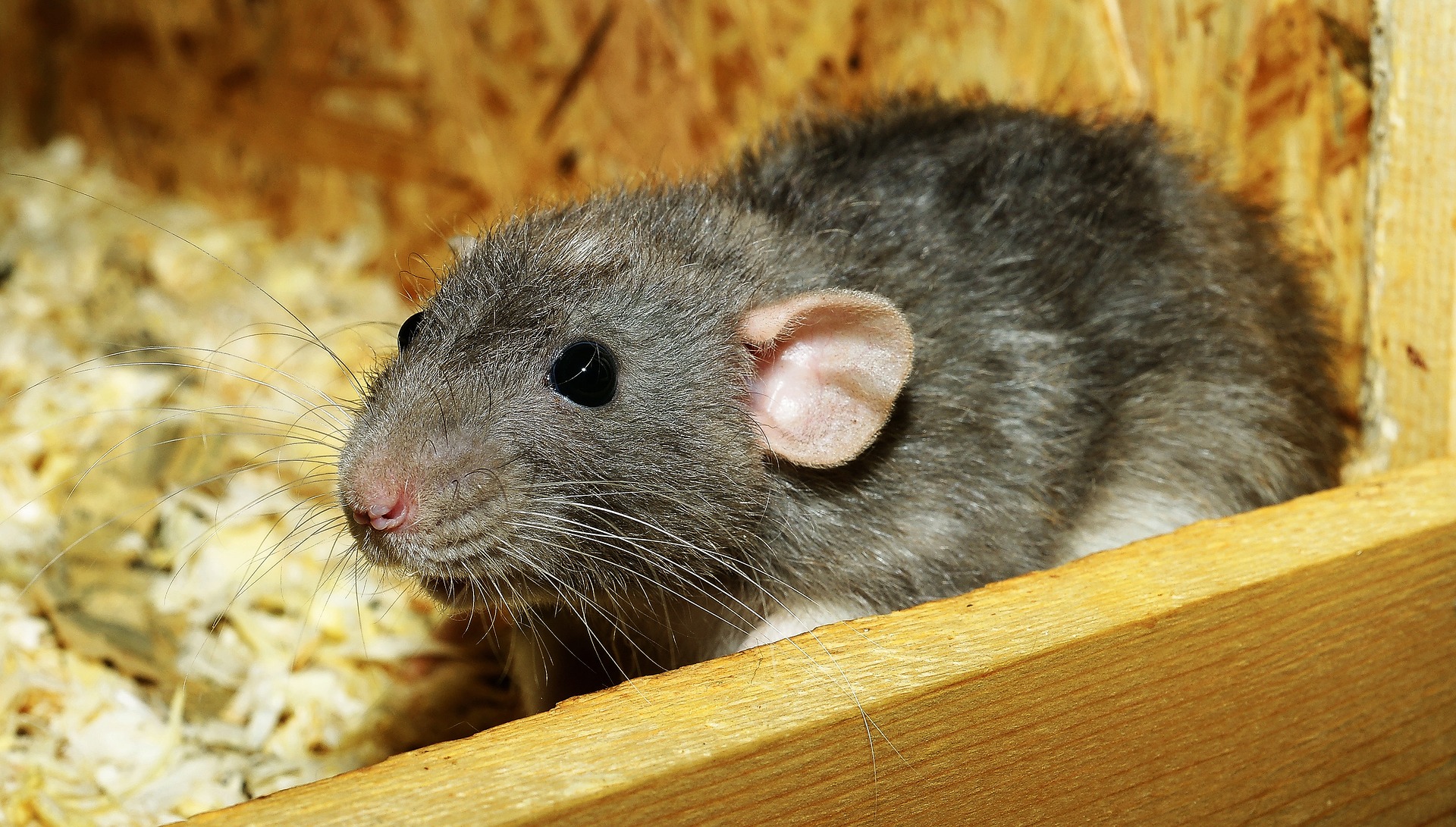
Rats tend to eat most of their food once in a time a day, where mice will typically nibble a little in frequent time durations. Both Rats and mice remain active during night where rats are pretty cautious in making their move and
mice are very curious. Mice aggressively tend to bite all stuffs what they smell during their course of move.
Norway Rats
Norway rats are comparatively large rodents than the other species that measures more than 40cm in length with its tail alone measuring to 21 cm. It weighs 500grams and often spotted with shaggy brown or grey fur with marked scales
over its ears and tail. Norway rats live in communities and they preferably make their home in underground burrows through which they can enter into buildings. Female can yield four to 22 pups at a single litter. It is very
difficult to spot Norway rats as they literally hide during day time keeping themselves invisible from humans. The only way to exterminate is by driving them out of their hiding spaces by passing fumes of rodenticides, keeping
bait or by placing traps.
Roof Rats
Roof rat is also known as Tree Rat, Ship Rat and Black Rat. Roof rats are thought to have originated in Asia and reached Europe in the 6th Century. They were later passengers on ships coming to this region. Today they primarily
inhabit coastal areas. Although roof rats have been driven out of many areas by the larger but are found in considerable number in the urban area. Roof rats are carriers of many different human diseases, including plague, typhus
and leptospirosis. This is the rat made infamous for its role in spreading the bubonic plague that took millions of lives in the middle ages. It is also destroys crops and fruit trees, both by eating and contamination. In a
residence they often pull down and contaminate insulation and chew electrical wires.
Rat control is important to avoid a number of serious diseases, which rats are known to transmit. There are nearly a dozen diseases directly linked to rats and the ever prevalent disease spread by rats in Malaysia is leptospirosis.
Besides that, rats also carry secondary pests in their fur, such as fleas, mites and ticks.
Rats can be very persistent and if they manage to gain access into your home or business premises they can spread these diseases,
cause considerable damage and contaminating food.
What do you need to do?
If you do see any of the signs mentioned below you need to act quickly to ensure any potential rat infestation is controlled quickly before it can spread, So call us for a free quote on 03-4024-8853, 016 2679 961 and
speak to a local expert who will be able help you.
.jpg)