Bed bugs are small wingless insects that feed solely upon the blood of warm blooded animals and people. Certain kinds inhabit bird nests and bat roosts and await the return of their hosts; others have adapted well to living in
the homes of people. When disturbed, bed bugs actively seek shelter in dark cracks and crevices. Bed bugs occur in all parts of the world. They are most abundant in rooms where people sleep, and they generally hide nearest
the bed or other furniture used for sleeping. Bed bugs are most active in the middle of the night, but when hungry, they will venture out during the day to seek a host. Their flattened bodies allow them to conceal themselves
in cracks and crevices around the room and within furniture. Favorite hiding places include the bed frame, mattress and box spring. Clutter around the room offers additional sites for these bugs to hide, and increases the difficulty
in eliminating bed bugs once they have become established.
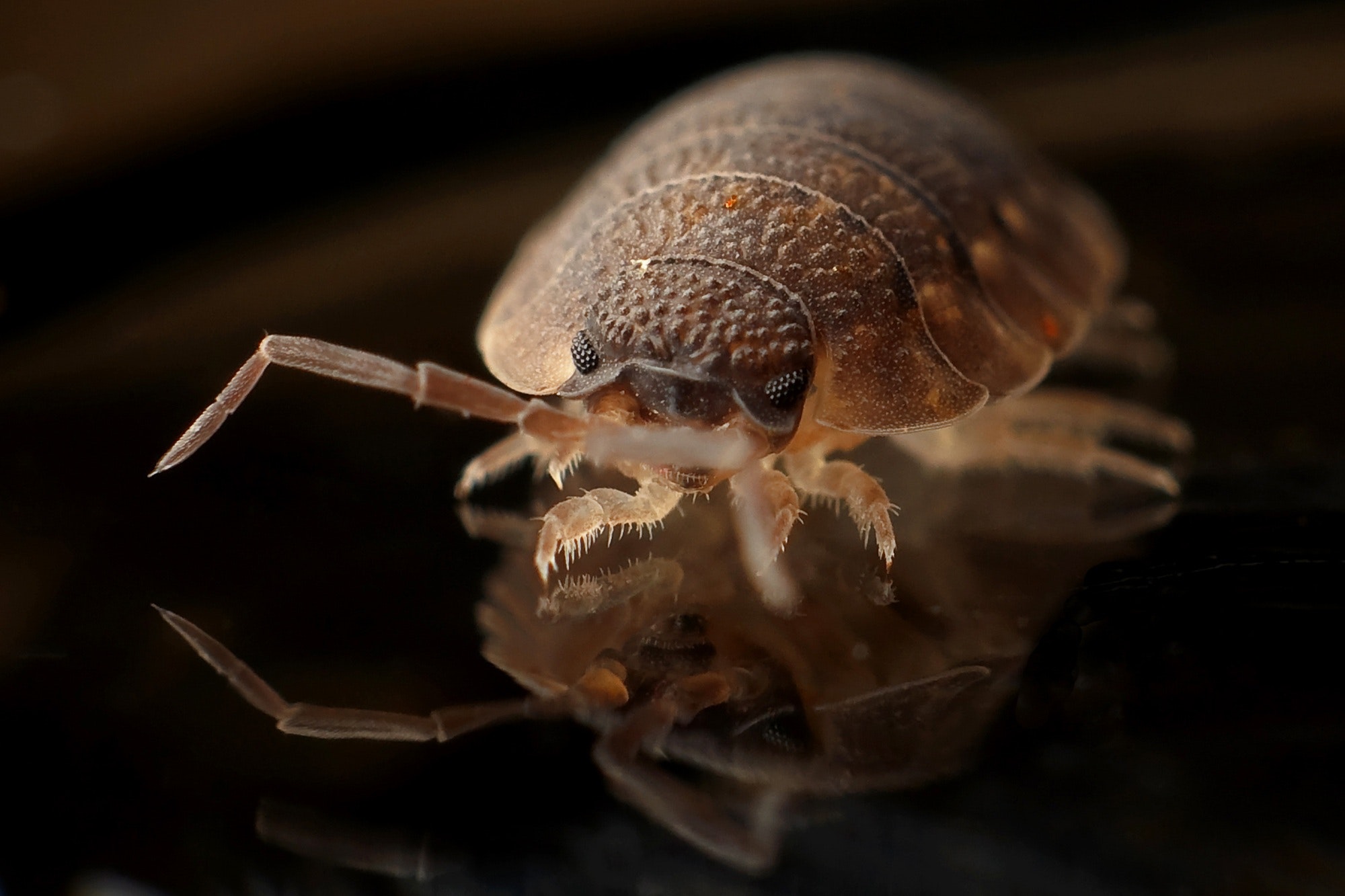
Size
1/4 to 3/8 inch (4-5 mm)
Color
Reddish brown or brown
HABITAT
At the beginning of an infestation, bed bugs are likely to be found only in the tufts, seams, and folds of mattresses and bed covers. In areas of heavy infestation, bed bugs can be found in crevices in the bedsteads. Because bed
bugs can live in bird nests, houses and buildings with several bird nests in the eaves and on the roof often will have bed bugs coming into the living areas.
LIFE CYCLE
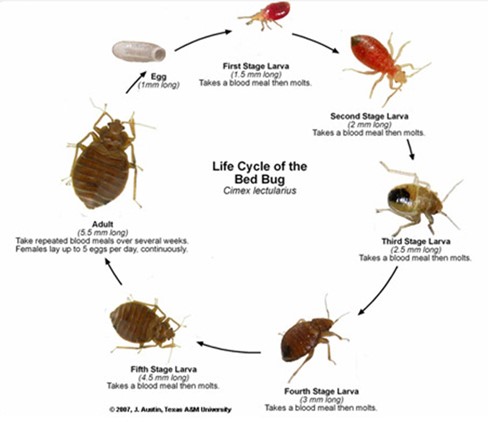
The life cycle stages of a bed bug are egg, nymph, and adult. The females lay about 200 eggs, usually at the rate of three or four a day, in cracks and crevices in the floor or bed. Newly hatched bugs begin feeding immediately.
They shed their skin five times before becoming adults.