A colony consists of the adult forms and brood. The adult forms include a queen and workers of various sizes. Winged forms are produced in late summer and remain in the colony until mating flights occur the following spring. Activities
of the workers include foraging, caring for the queen and brood, and excavating nest galleries. Carpenter ants have complete metamorphosis so brood will consist of eggs, larvae, and pupae. After mating, a queen initiates the
colony and cares for her first brood until workers are produced. The new workers care for the expanding brood and excavate wood for brood space. Winged forms are produced in older established colonies.
Carpenter ants do
not eat wood, but feed on a wide variety of plant and animal material. They are often found foraging on honeydew from aphids and are attracted to insects on vegetation.
Carpenter ant control is ideally accomplished if the
main nest can be located.
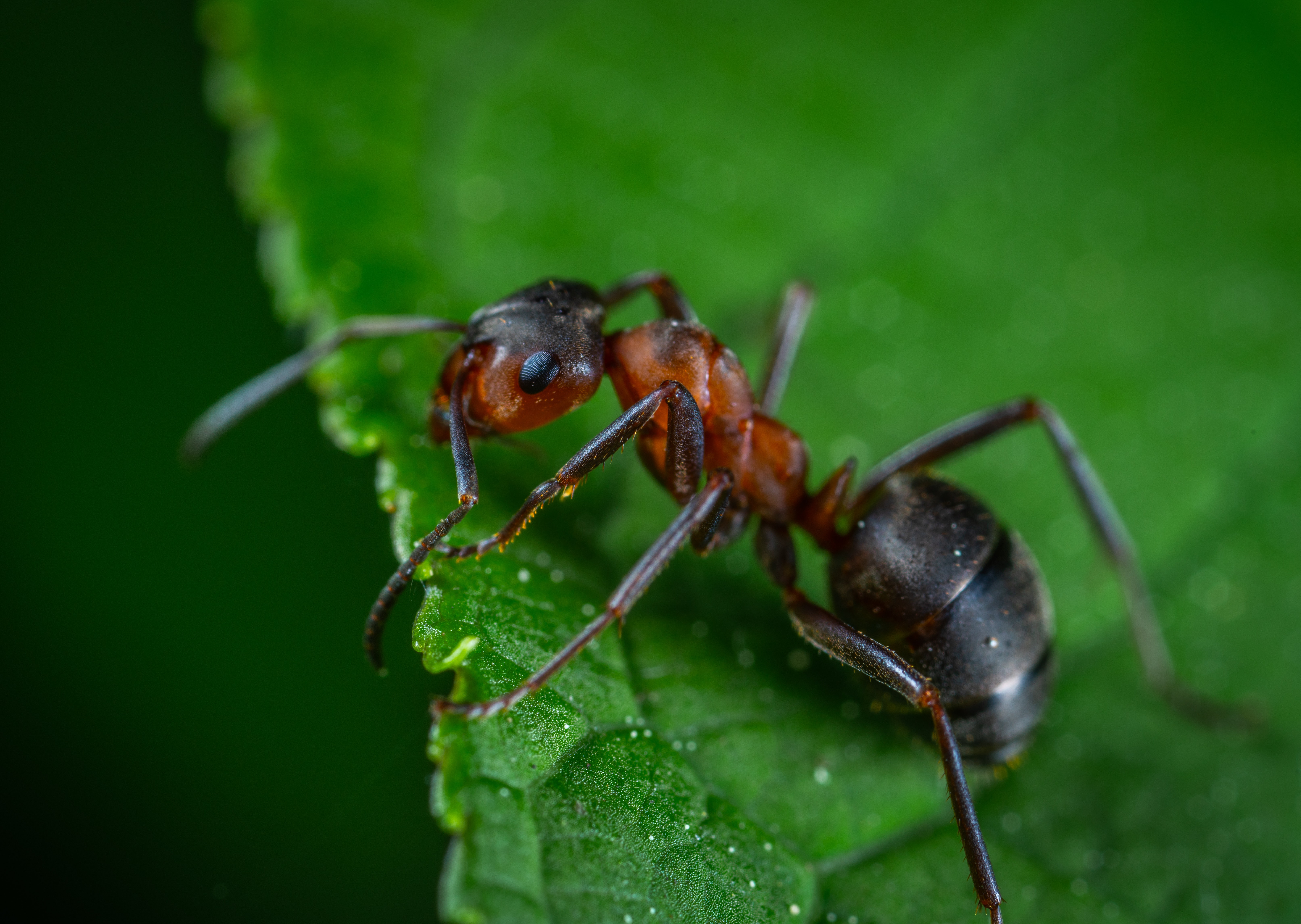
Clues to aid in nest location include:
- Sawdust extruded from galleries
- location of foragers
- Trails produced by foragers
- Sound produced by ants within walls or timbers
- Possible entrances which may include wood in contact with soil and unfinished openings in the structure.Inspections should consider the possibility of outside nest locations and the movement of ants into and through the structure
via wiring and plumbing.
The ultimate goal of preventing an infestation of carpenter ants should include:
- keeping vegetation from contact with buildings
- Preventing wood-soil contact
- Ventilating to prevent moisture accumulation
- Sound produced by ants within walls or timbers
- Stacking wood off the ground and away from buildings
- Repairing leaks in roofs and gutters